Recreation?? Have you ever heard this word? I think we all have, because our daily life is connected to the art of recreation, as a visual process. This process is linked mostly with the sense of vision; for example, you see a hand which is painting, but you associate it with a human, and the first impression you get is the man painting a picture. After you see the entire “panorama” you see that the man actually is a woman. Another person may see another thing and another detail. The “secret” is in the way how we perceive things, there is no such objective correct idea, only subjective impressions of it. We have dealt with different topics in this course and if I asked you: Do you remember the Opera House in Sydney Harbor? I guess you do. If you have the chance to lively see it, I bet the first thing which will draw the attention will be the shell like structure of the overall work. Why do we see this thing first? Because we are familiar to this now, we have a ba...
Posts

From the past to the present
From the Past to the Present: Aesthetics and Technology in Building (1965) Pierre Luigi Nervi • Italian architect, engineer, and builder • Buildings o Municipal Stadium, Florence o Orvieto Hangars in Orvieto, Terni, Umbria, Italy completed inP 1935 and later destroyed o UNESCO Headquarters, Paris o Pirell Office Building, Milan o Sports Arena, Rome o Port Authority Bus Terminal, New York City o Papal Audience Hall in Vatican City completed in 1971 Cathedral of St. Mary of the Assumption • Architectural phenomenon o Physical structure (obeying objective requirement) o Aesthetic aspect ( producing emotion of subjective nature) • Dual investigation as a builder and as a non-technician o A technical perfect work can be aesthetically impressive but there does not exist, either in the past or in the present, a work of architecture which is accepted and recognized as excellent from the aesthetical point of view which is not also excellent from a technica...
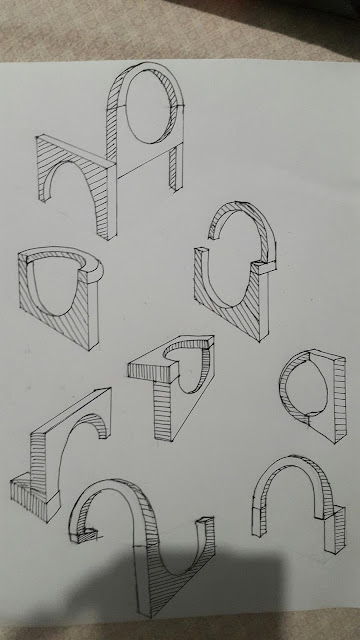
Hobby
"I'm not sick ,I'm broken. But I'm happy to be alive as long as I can paint"-Frida Kahlo said. I have been painting since I was 7 years old. I didn't take it seriously at first but after the first year I started loving painting. "I started putting my heart and my soul into my work and lost my mind in the process " Just like Van Gogh would've said. After 5 years I won my first competition . It wasn't a great price but it made me feel like a real painter and this price motivated me to keep on painting and perfect my painting techniques. In 2011 I won the first prize in a worldwide competition. This competition was organised by UNESCO and in 2016 , I entered the professional painters exhibition. By doing so , I was officially a professional. I really wanted to study art, but I also wanted to graduate architecture. When I paint I feel free , the purpose of art is to wash away the dust from our daily life and our souls . When I paint I don...
Daylight
Daylight in Architecture (Steen Eiler Rasmussen ) I. Daylight in Architecture A. Daylight is constantly changing i. Cannot be controlled by the architect ii. However the same room can be made to give very different spatial impressions by the simple expedient of changing the size and location of its openings B. There are three main types of openings in which light may enter a room i. The bright open hall a. Particularly common in countries with warm climates b. Offers a variety of lighting effects in different parts of the room c. Consists of a roof supported on columns for protection from the burning sun d. E.g. Philip C. Johnson’s house in New Canaan, Connecticut 1. Consists of one large cell, a rectangular room about twice as long as it is broad, with glass wall on all four sides and a solid roof e. To most people light means only much light 1. However the quantity of light is not as important as the quality of light 2. A front light is generally considered a poor...
Scale and proportion
By scale we understand the size of an object in comparison with other objects. We often compare the size of an object with the size of our body. The first one to have studied scale and proportion in detail was Rasmussen. Earlier in the past there was Pythagora who had studied scale. As a result we always compare one thing to another. Scale has a mathematical meaning too. It means the measure between an object and a measurable quantity . In architecture scale refers to the relationship between the drawing of the building and its real size. We have a few types of scales: - Visual scale (It doesn't refer to the actual size of things , but rather to how small or large something appears in relation to its actual size.) -Hierarchical scale (It refers to the variety of sizes in a art composition to show their importance. Usually bigger means important and smaller means less important. For example we can mention the walls in Egyptian temples ,the pharaohs are always in a larger scale ...